Every intersection of the Nine Map names a capacity. This is the deep dive beneath one of them: what it means, where established thinking meets it, what the evidence does and does not support, and what might help it develop. A worked example of the pattern, not settled science.
The proposition
We make what matters knowable so that attention can be invested.
The capacity this intersection asks us to cultivate is understanding.
Understanding is the capacity to turn information into organised knowledge one can think with, to grasp how things relate rather than only to hold facts. It asks someone to invest attention in making meaning: connecting new information to what they already know until it forms a structure they can use.
Understanding is more than information and less than judgement. Information is what is made available; understanding is what happens when a person works it into a connected whole; judgement is using that whole to form a view for a choice. Understanding is invested attention, not yet consequential action. It also differs from orientation beneath it: orientation is knowing where you are, understanding is grasping how it works.
It sits in the middle of the Inform column, between orientation and judgement. Read the column upward and knowing steadily becomes consequential: you locate yourself, you make meaning, then you use what you know to choose. Information is not understanding, and understanding is not judgement. A system can supply a great deal of information while developing very little of either.
In each context
The intersection stays generative as context changes. Inform crossed with Engage keeps pointing towards understanding, while its expression shifts.
Learning
Learners connect new material to what they know until it becomes knowledge they can use, not facts they can only recite.
Leadership
People grasp why the work matters and how the parts fit, rather than following instructions whose logic they cannot see.
Governance
Board members understand the substance well enough to probe it, not only to receive summaries of it.
System design
Information is structured so that patterns and relationships are visible, not buried in undifferentiated data.
Theoretical perspectives
Understanding is not a single construct. Several established bodies of work illuminate different aspects of it. Some speak to it directly; others explain the conditions and capacities it draws on.
Direct perspectives
- Meaningful learning
- New material anchored to relevant prior knowledge, rather than memorised in isolation.
- Deep and surface approaches
- The difference between working to grasp meaning and working to reproduce, which yields very different understanding.
- Expert knowledge organisation
- Experts hold knowledge in connected structures around principles, which is what makes it usable.
- Schema theory
- Understanding as the building and reshaping of mental structures that new information is fitted into.
- Constructivism
- Knowledge as actively built by the learner rather than transmitted intact.
Important neighbours
- Judgement
- Using understanding to form a view for a choice. It sits above, at Inform × Empower.
- Discernment
- Distinguishing quality and relevance. It sits beside, at Inquire × Engage, and works on what understanding supplies.
- Orientation
- Knowing where you are. It sits below, at Inform × Enjoy, and precedes understanding.
What research suggests
A caution first. What follows does not validate the six-principle model, and it is not offered as proof. It is the evidential trail: established work that concerns understanding directly, and separate work that supports part of the mechanism this intersection proposes.
Research directly concerning understanding
Meaningful learning, in which new material is anchored to relevant prior knowledge, produces understanding that rote memorisation does not (Ausubel, 1968). Students who approach material seeking meaning rather than reproduction produce qualitatively different learning outcomes (Marton & Säljö, 1976). And studies of expertise show that experts do not merely know more; their knowledge is organised around principles into connected structures, which is what lets them use it (Chi, Feltovich & Glaser, 1981), a picture later synthesised across the learning sciences (National Research Council, 2000).
Research supporting part of the mechanism
That prior knowledge strongly conditions how well people take on new and more complex ideas is among the better-established findings in the field (Willingham, 2009), which supports the link from information to usable knowledge without settling the whole proposition.
So the honest position holds. Understanding has substantial theoretical and empirical neighbours, while the specific claim, that making what matters knowable while attention is invested develops understanding, remains a hypothesis worth testing rather than a settled finding.
Research base
- Ausubel, D. P. (1968). Educational psychology: A cognitive view. Holt, Rinehart & Winston.
- National Research Council. (2000). How people learn: Brain, mind, experience, and school: Expanded edition (J. D. Bransford, A. L. Brown, & R. R. Cocking, Eds.). National Academy Press. https://doi.org/10.17226/9853
- Chi, M. T. H., Feltovich, P. J., & Glaser, R. (1981). Categorization and representation of physics problems by experts and novices. Cognitive Science, 5(2), 121–152. https://doi.org/10.1207/s15516709cog0502_2
- Marton, F., & Säljö, R. (1976). On qualitative differences in learning: I—Outcome and process. British Journal of Educational Psychology, 46(1), 4–11. https://doi.org/10.1111/j.2044-8279.1976.tb02980.x
- Willingham, D. T. (2009). Why don’t students like school? A cognitive scientist answers questions about how the mind works and what it means for the classroom. Jossey-Bass.
A proposed starting base, not a closed list, grouped by whether a source concerns understanding itself or supports part of the proposed mechanism.
Design implications
If we take these perspectives seriously, several design implications follow. These are design propositions, not a recipe for producing understanding.
Praxis
Practices make the design propositions concrete. For understanding, these might include explaining and teaching an idea back, worked examples followed by problems that require using them, concept mapping that makes relationships visible, and questions that cannot be answered by recall alone.
A practice can support more than one capacity. Teaching an idea back develops understanding while also exposing the gaps in it. The Nine Map is therefore not a filing system for practices; it provides a way of asking what a practice is intended to develop.
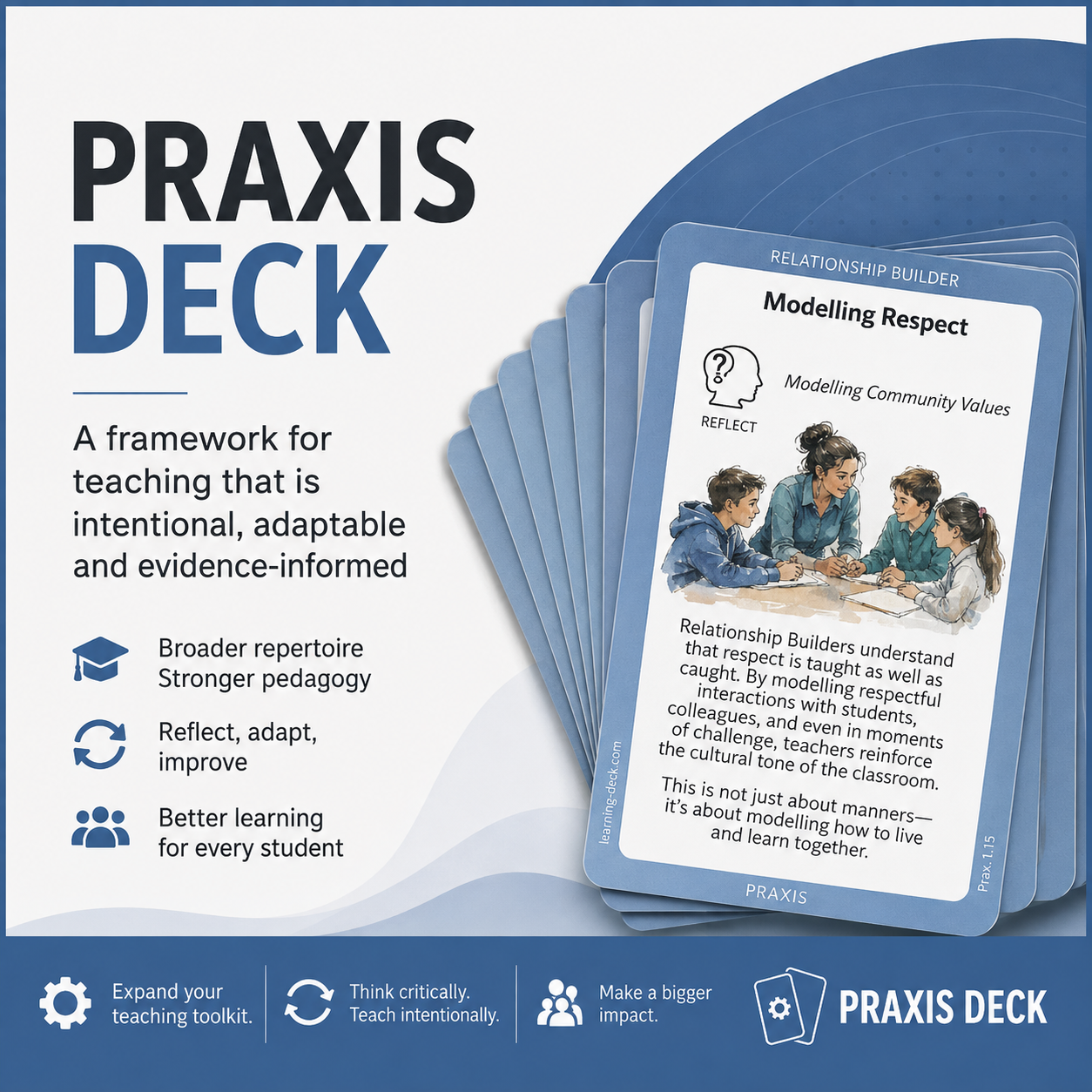
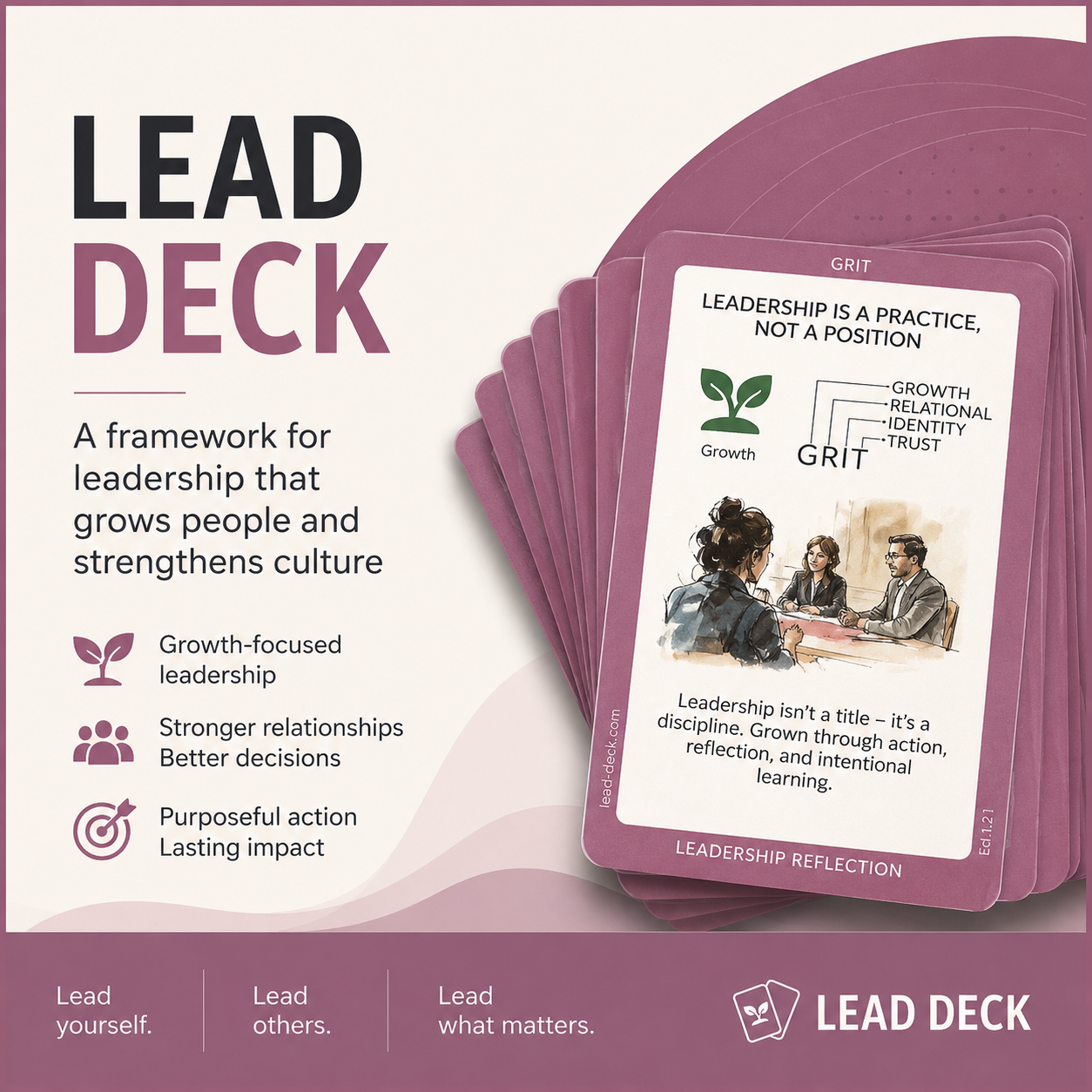
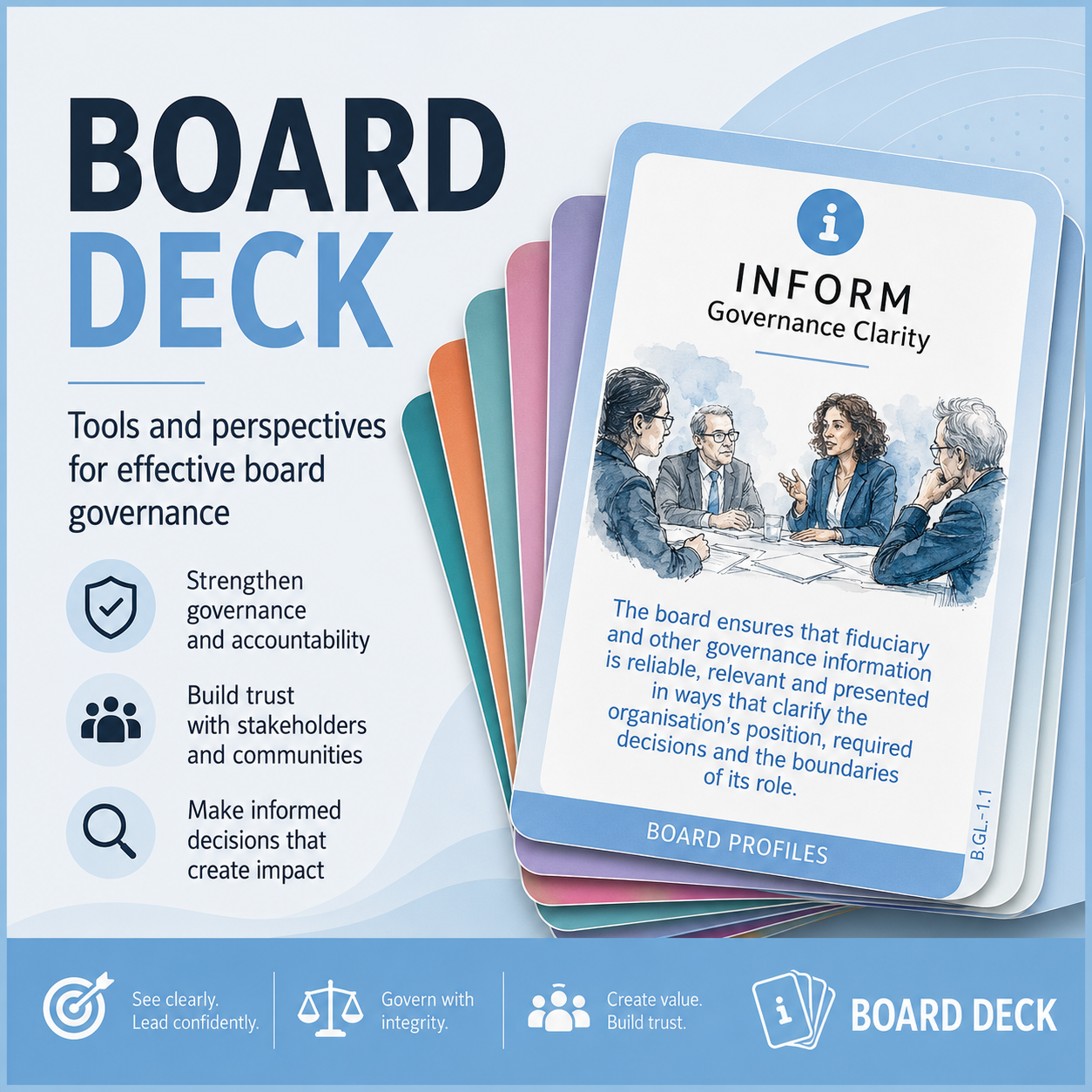
Relevant practices appear across Praxis, Lead and Board because the context changes while the underlying developmental purpose stays the same.
Recognition
How would you know understanding was developing? You would look for someone increasingly able to explain an idea in their own words, connect it to other things they know, apply it to a problem they have not seen before, and recognise what it does not cover.
Using knowledge in an unfamiliar problem matters most, because it is the hardest to fake. A reproduced explanation can be memorised; a transferred one cannot.
This is also the test that keeps the model honest. If increasingly good understanding never becomes recognisable, the Inform and Engage practices are not doing what we think they are.
The feedback loop
Practice, to recognition, to capacity, to principle, to purpose. What we can recognise in practice is how we learn whether the theory of action is working, or whether it needs to change.
Back to the Nine Map. Understanding is one of nine intersections, each opening into the same depth. Use the map above to move between them.